
Our Experience Coordinator, Sirpa Sinisalo, traveled to Italy in autumn 2025, where she interviewed professionals in the field of psychiatry. In this two-part series, we will publish the interviews conducted by Sirpa. She has a particularly close connection to Italy: she lived in Milan for nearly ten years around the turn of the millennium. Love first brought her there, and the city’s climate and atmosphere kept her for many years. Even today, she has many good friends in Italy — and this connection is also reflected in the way she examines Italian mental health work with closeness and openness.
Interview with Neuropsychologist Davide Mazzucchelli
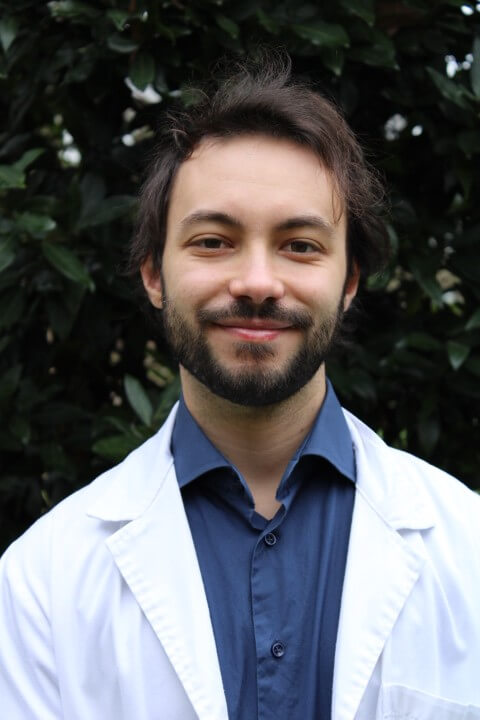
During my time in Italy, I also conducted a second interview with a professional in the field of psychiatry. Neuropsychologist Davide Mazzucchelli lives in the Varese area, about an hour from Milan, and is currently self-employed. Here is his interview.
What inspired you to study psychology?
“My desire to become a psychologist arose when I was 19 years old. At that time, I became acquainted with a particular branch of psychology — neuropsychology — and especially clinical psychology. I was fascinated and impressed by neuroscience in general, but particularly by its potential to help people who have sustained brain injuries. This falls within the field of rehabilitative neuropsychology. The field helps patients restore cognitive functions that have been impaired due to injury. That is why neuropsychological rehabilitation is the area of psychology that interests me the most.”
What is your educational background, and is this the typical path to becoming a psychologist in Italy?
“My educational path is typical for psychology students in Italy. I studied at the University of Milano-Bicocca for 3+2 years: first completing a three-year degree in ‘Psychological Sciences and Techniques,’ which provides a broad foundation across all areas of psychology, and then a two-year specialization in ‘Clinical Psychology and Neuropsychology across the Lifespan.’ Both study cycles included internships: during the first three-year period, I worked at a learning disabilities center, and during the second, at a Swiss clinic specializing in the rehabilitation of neurological patients.
Until two years ago, Italy had a system requiring an additional mandatory internship of approximately one year after graduation. At the end of this period, graduates could take a national licensing examination. After passing it, they could register with the national professional body of psychologists and obtain official licensure. I completed this mandatory internship in the neuropsychological rehabilitation department of a public hospital in the Varese area, where I live.”
What kind of practical experience do you have?
“The internships during my studies were mostly observational and did not include much hands-on practice. It was only during the post-graduation internship that I was able to actively participate in rehabilitation under the supervision of my tutor. I conducted cognitive assessments and exercises aimed at reactivating impaired functions. After completing this final internship, I took and passed the national licensing exam and began working independently.
Currently, I treat several private patients who require neuropsychological rehabilitation. In addition, I work with an association whose activities include cognitive stimulation for seniors diagnosed with dementia.”
What are your main areas of interest and possible future specialization?
“As I mentioned earlier, I am interested in neuroscience in general and in clinical neuropsychology. What particularly fascinates me are the neurobiological processes that influence human behavior.”
What is especially important in the work of a psychologist?
“In my opinion, in all areas of psychology it is essential to have a solid knowledge of theory and the techniques used. Equally important is the ability to build a relationship with the patient: listening skills, kindness, flexibility, gentleness, firmness, and the capacity for self-reflection. This reflection involves recognizing situations one finds personally challenging and considering how to act with the patient.
For example, it is natural and easy for me to be gentle and kind, but at times it is more challenging to be firm when firmness is required.”
Are there peer support workers or experts by experience in Italy?
“Not at least in any official role.
During my studies, my fellow students acted as peer support when we discussed and shared work-related difficulties and challenges. In these conversations, personal insecurities often emerged — issues that might have felt difficult to discuss with a supervisor. However, discussing them with others in the same situation and sharing similar experiences felt natural.”
What kind of satisfaction does the work of a psychologist offer?
“My best experiences are connected to the progress achieved through rehabilitation — especially when improvement exceeds expectations. When rehabilitation is this effective, it helps a person return to their previous life and brings great joy to their loved ones and to the healthcare staff.”
What are the possible negative aspects of a psychologist’s work?
“Sometimes recovery is slower and more difficult than initially expected, which can frustrate both the patient and their caregivers. One must be prepared for this, as frustration also affects mental well-being.
Additionally, when working with seniors diagnosed with memory disorders, the aim is often to maintain existing abilities, as progress is rarely achieved. It must be acknowledged that cognitive functions and quality of life gradually decline. At times, it can feel like fighting windmills.”
What is your professional dream?
“My dream would be to have the opportunity to work with patients in the subacute phase, as this would allow work at the moment of greatest neuroplasticity and flexibility. I gained experience with this during my internship at the Swiss clinic, where unfortunately it was not possible for me to find employment.
In a rehabilitation ward, daily work with patients provides the best conditions for recovery. In contrast, in my current work with seniors, I meet chronic patients only once a week. Improvement can occur, but it is only partial.”
What message would you like to send to Finnish patients?
“In Italy, clinical psychology and especially neuropsychology are still in a growth phase and need to become more firmly established within healthcare structures. There is very limited space for them in public hospitals, and in any case, staffing levels are too low in relation to the large number of patients.
I have read that in Finland it is easier to access services in the public sector, and you likely have a better ratio of healthcare staff to patients. I believe there may be reasons for criticism in some respects there as well, but I would encourage Finnish people — and hope that patients appreciate — the quality of your services and your opportunity to access care through the public system.”