
Our experience coordinator, Sirpa Sinisalo, travelled to Italy in the autumn of 2025, where she interviewed experts in the field of psychiatry. In this two-part series, we get to read the interviews conducted by Sirpa. She has a particularly close connection to Italy: she lived in Milan for nearly ten years around the turn of the millennium. Love brought her there, and the city’s climate and atmosphere kept her there for a long time. Even today, she has many good friends in Italy — and this connection is reflected in the way she observes Italian mental health work with warmth and openness.
Interview with Dottoressa Emanuela Apicella
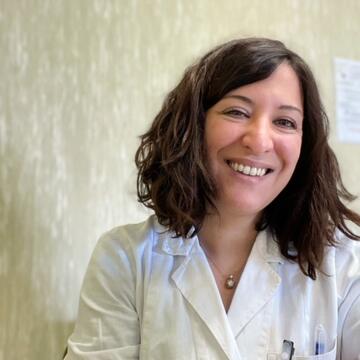
In November, I returned to my former home city of Milan and interviewed psychiatrist Emanuela Apicella on 4 November at the Food for Mind Center in Varese, where she serves as director.
1. What is a typical client like?
“Most of our patients have eating disorders: among women, anorexia or bulimia is common, and among men obesity or BED symptoms (binge-eating disorder). In Italy, nearly four million people suffer from an eating disorder (in a country of about 59 million inhabitants). Clients come from all age groups, most commonly between the ages of 8 and 65. Patients with mental health disorders are mostly women who attend psychotherapy due to psychiatric issues.
Other patients have mental health disorders such as psychosis or personality disorders. General psychiatry patients are predominantly adults. Since the pandemic, eating disorders have become the most common diagnosis among young people, with a 50% increase. Anxiety disorders and panic attacks have also grown significantly, and depression and self-harm, such as cutting, have become more common.”
2. What kind of training do you have?
“I graduated as a medical doctor and then completed a four-year specialization in psychiatry. My interest in psychiatry began when I was 16 years old. For a little over ten years now, I’ve focused on eating disorders, completing several specializations in that field. I also have training as a psychotherapist.”
3. What is essential in treatment?
“A multidisciplinary team is crucial. The patient should be supported simultaneously from several directions—through medication, internal medicine, psychotherapy, and nutritional science. My own therapeutic framework is psychodynamic with a humanistic orientation. In Italy, we are ahead of many other countries in the treatment of eating disorders partly because of these approaches. For example, the specialized hospital Auxologico Piancavallo has 90 patient beds.”
4. What are mental health services like in Italy? Is it easy to get help?
“We have public services, but there are challenges—for example, a shortage in child neuropsychiatry, and getting an appointment in the public sector can take a very long time. There is also a lack of resources. In contrast, private facilities that receive public support have shorter waiting times.
We also cannot avoid talking about suicide, because suicides do occur. The insufficiency of services contributes to this. Another factor relates to stigma, which makes it difficult for a person to seek help.”
5. How does a client know they are recovering? What is the average length of treatment?
“Recovery from an eating disorder is fairly long—up to five years. The problem is that there are not enough suitable hospital treatment places. In the treatment of eating disorders, we can help the patient improve their situation by convincing them of the importance of social relationships: moving away from isolation, which drives the illness and encourages compulsive, uncontrolled behaviors that maintain it. The process to recovery involves developing a healthier relationship with food. When that begins to normalize, we can say the client’s recovery journey is well underway.”
6. Who are your cooperation partners?
”Centro Auxologico operates in the regions of Lombardy, Piedmont and Lazio, working in close collaboration with the Centri Salute Mentali mental health centres. It also cooperates with public psychiatric services, such as local health centres.
In terms of international cooperation, Istituto Auxologico publishes materials on various themes related to eating disorders. We are open to other forms of cooperation as well.”
7. Anything else you would like to add?
“The mother tongue plays an important role in psychiatry because the treatment is largely based on words. Here at the Food for Mind Center in Varese, we also have several patients with foreign backgrounds, for example from France and Spain. They are mostly young people, and some of our staff can provide support in the patient’s own language so that a language barrier does not emerge. English is also commonly used to ensure mutual understanding.”