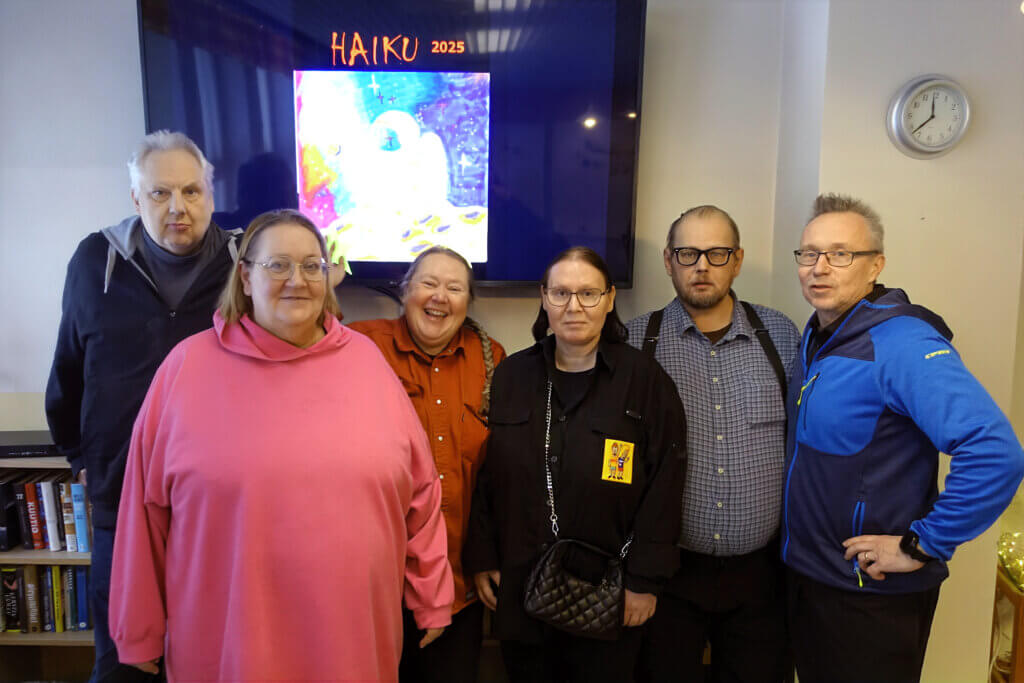
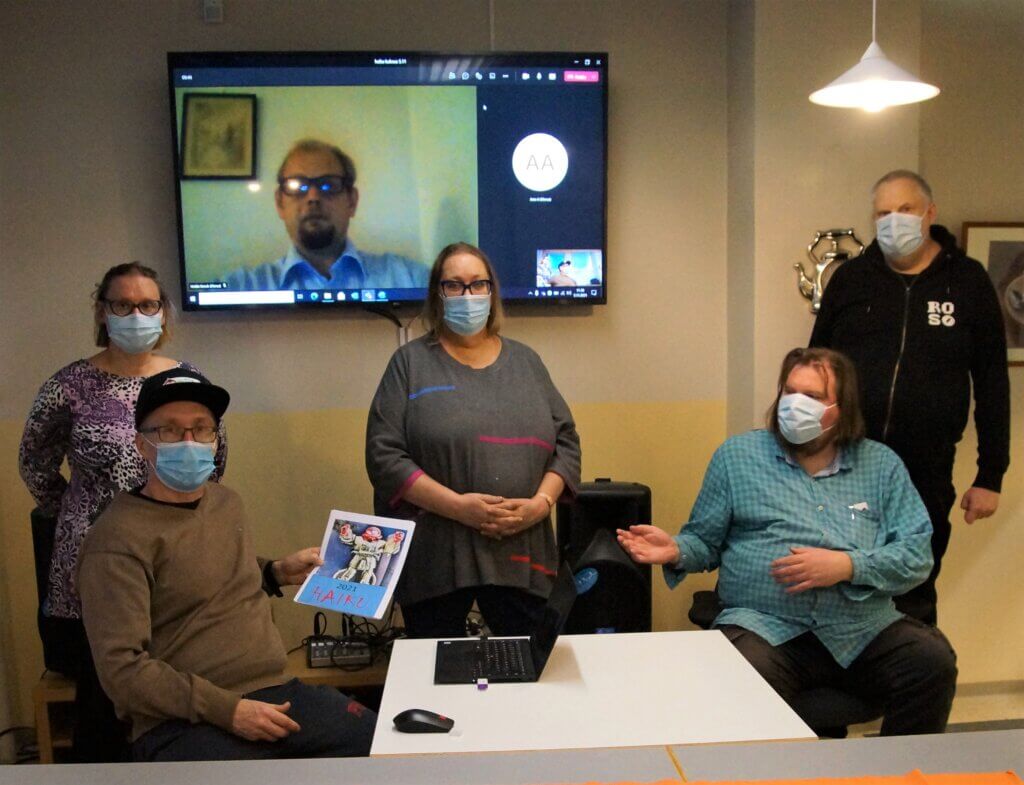
At Niemikotisäätiö’s Haaga Activity Centre, a group of service users runs their own editorial team, producing the annual Haiku magazine. Haagan Haiku is published just before Christmas each year, and over time it has grown into a diverse and impressive publication – the latest issue reached nearly 60 pages.
Haiku is not just a magazine; it is a shared project in which everyone has an important role. The group meets regularly, and the process is based on collaborative planning, writing, and discussing visual solutions together.
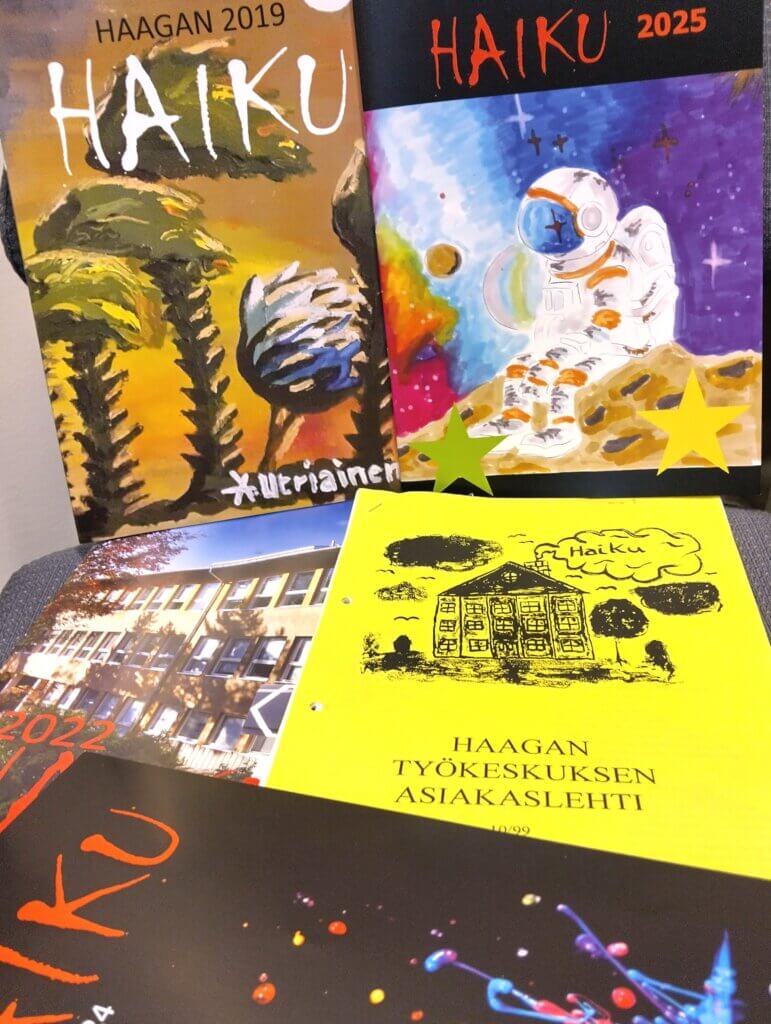
A Long Tradition Dating Back to the Last Millennium
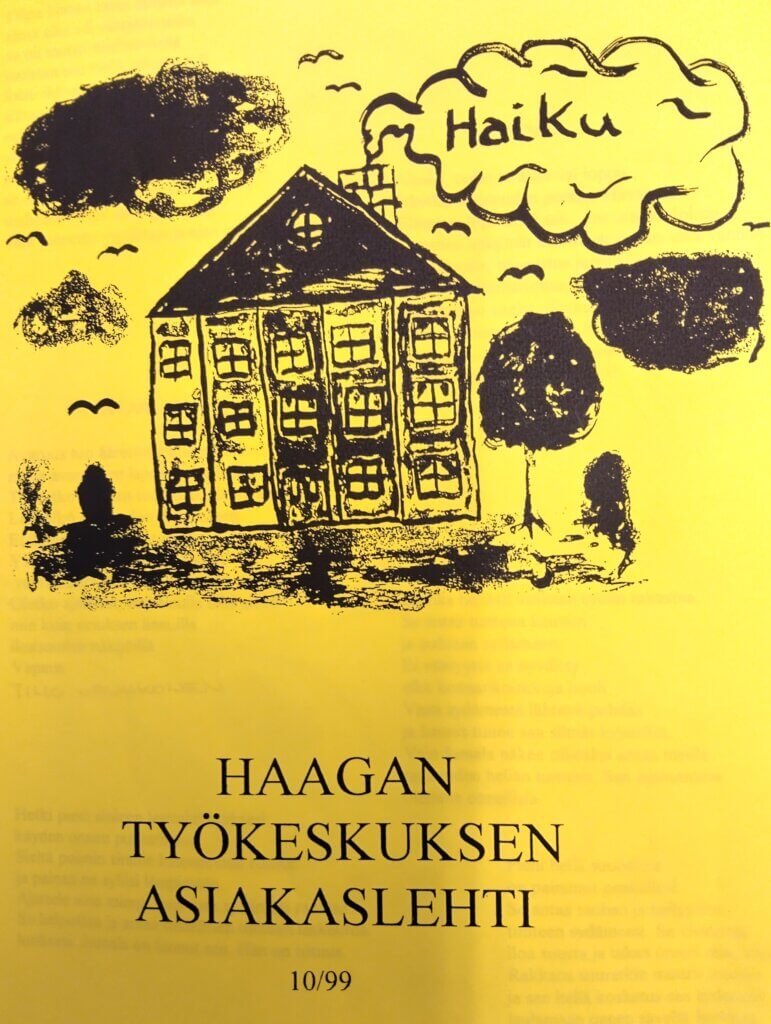
The Haiku magazine has an exceptionally long history. The editorial group was founded in the last millennium, at a time when articles were written on typewriters and the magazine was assembled quite literally by cutting and pasting pages together.
Over the years there have been breaks and different phases, but the Haiku name and the idea of a shared magazine have remained. In its current form, Haiku has been published continuously since 2017, and many members of today’s editorial team have been involved from the beginning.
At first, the magazine was created using Word, and later for many years with Publisher. When Publisher was discontinued, the most recent issue had to be produced in Canva – a solution that did not serve a multi-page, print publication particularly well.
Even the COVID-19 pandemic did not stop the magazine from being published. The team worked remotely and, for a time, followed guidelines by wearing masks. Since then, it has also been possible to participate in the group remotely.
A New Tool to Support the Work
This year, the Haiku team began using a new publishing tool: Affinity, a professional desktop publishing program. It once again enables high-quality layout design, even for thicker issues, and supports the group’s ambitious approach.
The technical production is mainly the responsibility of Sami and Arto, but the entire group contributes to the magazine’s content. Editorial team members take part in choosing the colour palette, images, and themes, and the writing is shared among several contributors.
“Many members have clearly defined roles. One writes, another proofreads, a third focuses on images or idea development. That makes the work meaningful,” says Marko Hanni, the group’s instructor.
Comics, Illustrations and Everyday Themes
The content of Haiku reflects its creators. Almost every year, the magazine has featured the comic strip Töpeksijä, which Sami recalls developing in 2017. There are also plans to regularly publish work from the drawing group – for example, dedicating one page per year to their illustrations.
The magazine covers everyday life, events and phenomena at the Haaga Activity Centre, as well as broader themes such as experiential expertise. The progress of the Koke training programme is followed this year through several articles, all the way to its culmination and the awarding of certificates.
“The magazine offers a chance to pause and explore topics in the authors’ own voices,” Marko Hanni explains.
Images at the Heart of the Magazine
This year, a photography competition will also be organised at the Haaga Activity Centre, coordinated by the editorial group. Together with Niemikotisäätiö’s communications team, the group will form a jury to select the photographs to be published in Haiku.
Images play an important role in the magazine – both in print and online. They make the centre’s activities visible and accessible, even to those who are not previously familiar with the activity centre.
A Meaningful Experience for Its Creators
For the members of the editorial group, Haiku is more than an annual project. It is a place to learn, experiment and express themselves. One member describes the process as challenging but rewarding; another says it is an opportunity to “play journalist.”
“Haiku is also something concrete you can include on your CV. It’s great to have your work and skills made visible,” Marko Hanni says.
Haiku magazine highlights the diverse and highly valued activities of the Haaga Activity Centre – in a way that reflects its creators. It is an example of how collaborative work can produce something lasting, meaningful and continuously evolving year after year.