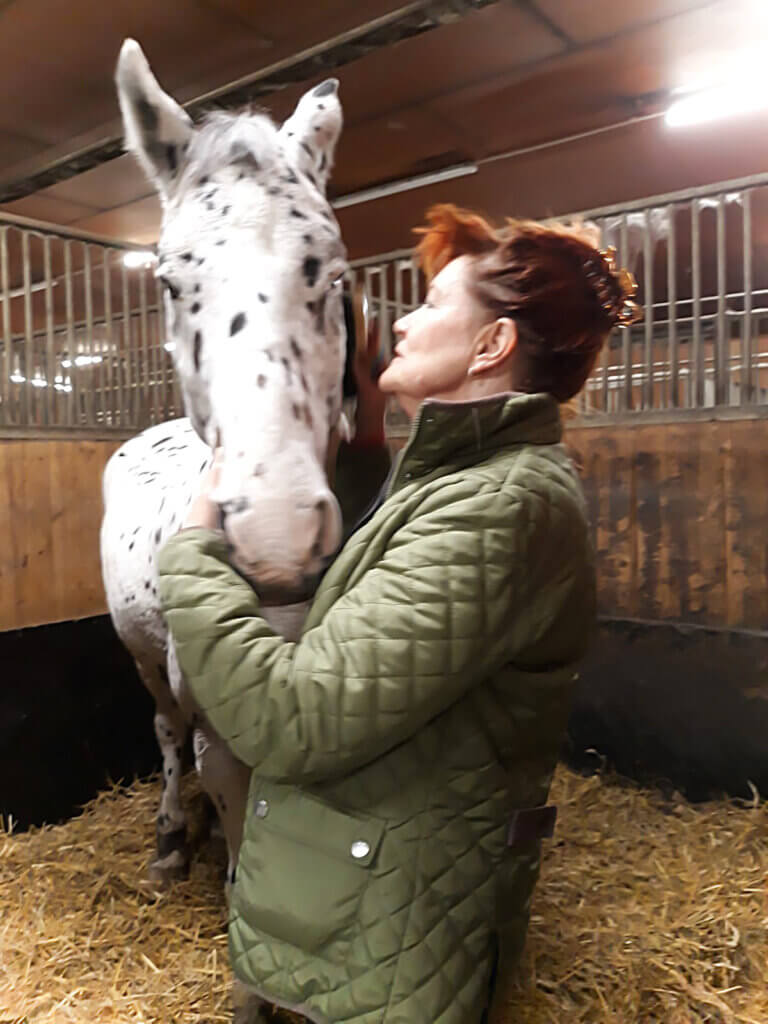
The staff of Niemikotisäätiö selected Arja Hacklin-Markiala, Lead Instructor at Niemikotisäätiö Myllypato, as Rehabilitator of the Year 2025. The recognition comes from colleagues – people who see the work up close and understand what it means to be present even when the work cannot be measured in numbers, schedules, or documentation.
The Rehabilitator of the Year has been chosen by employees at Niemikotisäätiö since 2011.
Your colleagues chose you as Rehabilitator of the Year – how does it feel?
Arja describes the feeling warmly; recognition from colleagues means a great deal because it comes from people who share the same everyday work.
“It feels surprisingly good – and somehow also a bit exciting.”
What do you think led to this expression of trust?
Arja believes the positive feedback from her own team stems from a good working atmosphere; it’s pleasant to come to work, and collaboration with everyone feels easy.
She feels that trust largely grows from a genuine interest in people – not just in their situation or diagnosis.
What do you consider most important in your work?
Being enthusiastic and genuinely interested in people is essential. Arja believes in possibilities even when no visible progress seems to be happening in rehabilitation. If everything is viewed negatively, “nothing will come of it.” She also feels that she doesn’t scare easily – and doesn’t take everything personally.
Although rehabilitation work requires plans, documentation, and goals, what matters most is still what happens between people.
“That togetherness and interaction. So much happens that you can’t even document.”
For Arja, it is important that people do not disappear beneath structures, even though today’s work includes many tasks that take time away from encounters.
She feels that the most important part of the work often happens quietly and unnoticed – in everyday safety, honest conversations, and in ensuring that a person does not feel alone even when dealing with painful issues.
What kind of impact has your work had on your life?
Arja says that Niemikotisäätiö has been a workplace where she has been able to build a long career and grow professionally.
She particularly appreciates the trust placed in employees’ expertise. “There are long employment relationships at the foundation, people are trusted, and you’re allowed to do your work in your own way.”
Job rotation and varied roles also support professional growth. She feels she has gained perspective and confidence from seeing different sides of the work.
As advice to other professionals, Arja recommends having free time that allows you to reset and momentarily step out of the caregiver or professional role. “Setting personal boundaries is really important.”
How do you think you have the greatest impact on the lives of people in rehabilitation?
In Arja’s thinking, impact is not primarily about big actions or visible successes. It’s about being met as you are – and about hope remaining present.
She also highlights that people’s situations and access to care can be unequal.
Arja describes how some people gain access to longer-term care surprisingly easily, while others do not, even when the need is obvious.
She reflects that many factors may influence this: resources, the system, and even how well a person can articulate their own condition.
Concern can be heard in Arja’s voice, but also a strong principle: no one should be left on the side of “lost hope.”
What kind of development would you like to see in mental health rehabilitation?
Arja sees the impact of digitalization on people’s lives – and mental health – as a major phenomenon.
She says that some people become excluded when digital services and systems become too complex. On the other hand, some immerse themselves too deeply in the digital world, especially young people. “The phone is constantly in their hand.”
She also reflects on how social media encourages constant comparison to a supposedly “good life” that may not even be real. This creates pressure, feelings of inadequacy, and can worsen mental distress.
Arja’s hope for the future is clear: services and rehabilitation must see the person – not just the system’s required entries.
Any wishes, praise, or criticism for decision-makers?
When asked for feedback for decision-makers, Arja offers praise – and directs it to Niemikotisäätiö.
She especially thanks the foundation for enabling a long career and providing room for professional growth. Trust is essential to her: the feeling that you can do your best at work and develop, without everyone being forced into the same mold.
At the same time, a broader message comes through in Arja’s words: mental health rehabilitation must not be lost in structures. There must be time left for the person – for that moment on which rehabilitation is often built.
“So that the person doesn’t somehow fade into the background.”