
Snow lashes down and the wind hits our faces. It is quite dark and gloomy. We may find ourselves wondering where to draw more strength and resilience from. For one person, it might mean inviting friends over; for another, meeting up in a cozy café outside the home. Sometimes it can be a pajama day—being unavailable and unreachable to anyone. At other times, it may be curling up in the corner of the sofa with a good book, a TV series or favourite music, accompanied by a cup of something warm.
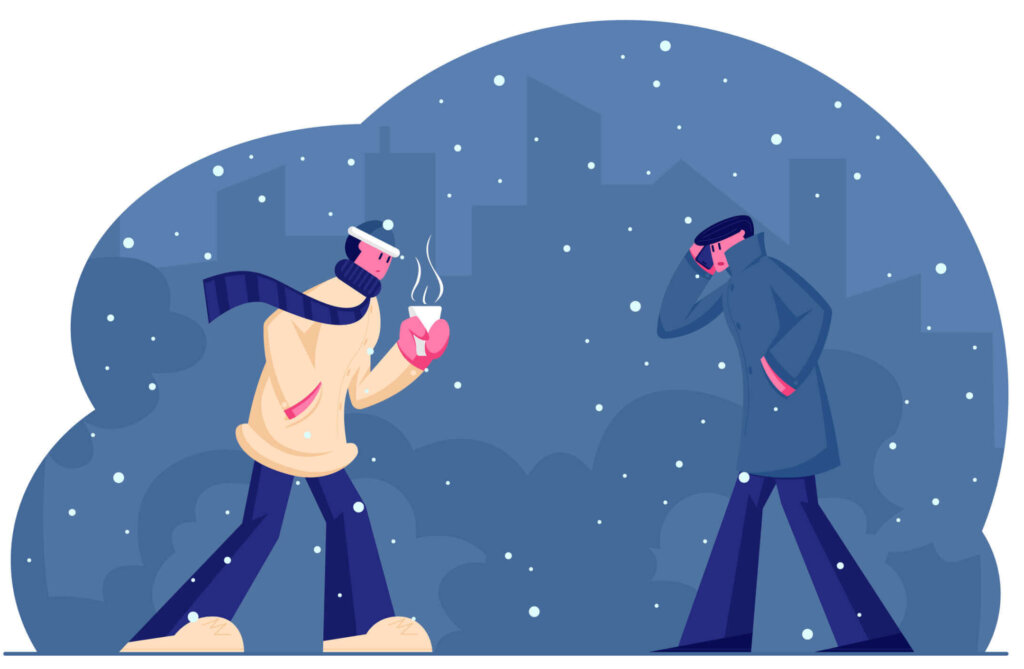
In midwinter, when it is darkest and coldest, could it be possible to be gentle and understanding toward ourselves? We cannot always be efficient, nor do we always have to cope. Compassion and empathy—toward ourselves and others—can offer a renewed perspective on life. Our surroundings and nature invite us into deeper rest; could I allow that for myself and for others as well? What if I simply did a little less? With a more planetary way of thinking, we might live more in tune with the seasons, as people did in ancient times. In this way, humans would once again be part of nature, as they were, for example, before industrialisation.
Seasonal affective symptoms are common in winter (up to 25% according to Partonen, 2023). They are linked to seasonal variation and a lack of light—especially insufficient morning light. Typical symptoms include excessive sleepiness (sleep not feeling restorative despite long hours) and increased appetite, particularly cravings for sweets. Seasonal fatigue can be prevented with regular physical activity during daylight hours, a healthy diet including vitamin D supplementation, and social relationships and activities that foster a sense of belonging, provide support, and encourage engagement in hobbies. In the treatment of seasonal affective disorder proper—a subtype of major depressive disorder or bipolar disorder—sufficiently effective bright light therapy plays a key role (e.g. Partonen, 2024). Medication and cognitive therapy may also be considered. Dawn simulation light therapy is often beneficial as well.*
In Finland, having four distinct seasons is a great richness. In some countries, there are only two seasons—or even just one. When I lived in Italy, it was pleasant that winters were mild and short, while spring and autumn were longer than here. Summers in the south are also wonderfully long. Our frosty weather, with sunshine filtering through a hoarfrost-covered forest, is postcard-beautiful. If only we could remember that in winter we do not have to live at the same intensity as in summer. Less is often more than enough.
*Source: Kaamosoireilun ja -masennuksen ennaltaehkäisy, tunnistaminen ja hoitokeinot – Prevention, identification and treatment of seasonal affective symptoms and depression (2024). Lapland University of Applied Sciences, registered nurses Elina Hannula and Jenni Räisänen.